


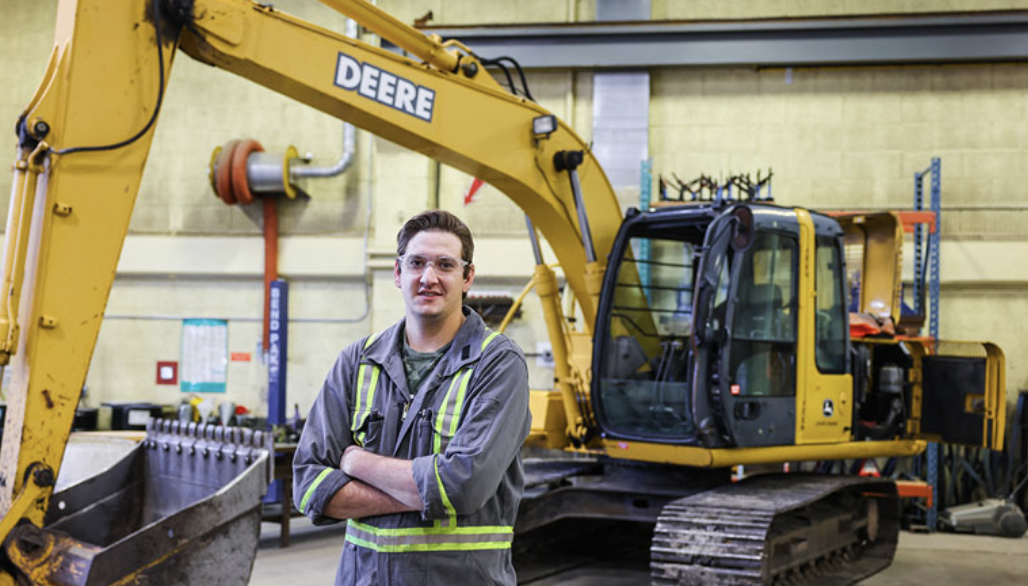
Heavy equipment is essential to Canada’s construction, mining, transportation, agriculture, forestry, infrastructure, and industrial sectors. Behind these machines are skilled technicians who inspect, maintain, diagnose, and repair the equipment needed to keep major projects and businesses operating.
For international students interested in mechanical systems, engines, hydraulics, electrical systems, and hands-on technical work, Heavy Equipment Technician programs in Canada can provide practical training for a career in the skilled trades.
Students can develop skills that apply to equipment such as excavators, loaders, bulldozers, graders, tractors, trucks, and other heavy machinery.
For students planning to Study in Canada, heavy equipment technology can be a career-focused option that combines classroom learning with practical technical training.
APPLY TO STUDY IN CANADA TODAY
Why Study Heavy Equipment Technician Programs in Canada?
Heavy equipment technicians work with complex mechanical, hydraulic, electrical, and electronic systems.
A Canadian training program can help students develop practical skills in:
- Diesel engines
- Heavy-duty machinery
- Hydraulic systems
- Electrical systems
- Powertrains
- Braking systems
- Steering and suspension
- Preventive maintenance
- Equipment diagnostics
- Welding and fabrication basics
- Technical drawings
- Workplace safety
The training can be useful for students who prefer practical learning and want to build technical skills rather than pursue a purely classroom-based career.
For those considering Canada study abroad, heavy equipment programs can also provide a pathway into Canada’s broader skilled-trades sector.
What Do You Learn in a Heavy Equipment Technician Program?
The exact curriculum varies by institution, but students can expect a combination of theory, laboratory instruction, workshop training, and practical projects.
1. Diesel Engines
Diesel engines are widely used in heavy equipment.
Students may learn engine components, operating principles, maintenance procedures, inspection techniques, diagnostics, and repair methods.
2. Hydraulic Systems
Hydraulics are fundamental to many construction and industrial machines.
Students can learn how hydraulic pumps, cylinders, valves, hoses, reservoirs, and other components work together to operate equipment.
3. Electrical and Electronic Systems
Modern heavy equipment relies heavily on electrical and electronic systems.
Training may cover batteries, starting and charging systems, wiring, sensors, electronic controls, testing equipment, and troubleshooting.
4. Powertrains
Students may study the systems responsible for transferring engine power to the machine’s wheels or tracks.
Depending on the program, this can include transmissions, clutches, differentials, final drives, and related components.
5. Braking and Steering Systems
Safe equipment operation depends on properly functioning braking and steering systems.
Students can learn how to inspect, test, maintain, and troubleshoot these systems.
6. Preventive Maintenance
Preventive maintenance helps reduce equipment breakdowns and improve reliability.
Students may learn inspection schedules, lubrication, fluid checks, component replacement, equipment servicing, and maintenance documentation.
7. Diagnostics and Troubleshooting
Heavy equipment technicians need strong diagnostic skills.
Students can learn how to identify faults, use diagnostic tools, interpret technical information, test components, and determine appropriate repair procedures.
8. Welding and Fabrication
Some programs introduce students to basic welding and fabrication skills that can be useful when working with heavy machinery and equipment components.
9. Technical Drawings and Service Information
Technicians must be able to understand technical information.
Students may learn to read diagrams, service manuals, hydraulic schematics, electrical diagrams, and other technical documentation.
10. Workplace Safety
Safety is an essential part of heavy equipment maintenance.
Training may cover safe use of tools, lifting equipment, electrical systems, hydraulic pressure, hazardous materials, personal protective equipment, and workshop procedures.
Types of Heavy Equipment Programs in Canada
International students may encounter different program titles depending on the institution.
Heavy Equipment Technician Programs
These programs focus on maintaining and repairing heavy machinery and can provide training in mechanical, hydraulic, electrical, and electronic systems.
Heavy-Duty Equipment Technician Programs
Heavy-duty equipment technician programs can provide broader training for students interested in servicing construction, industrial, mining, forestry, and other heavy equipment.
Heavy Equipment Repair Programs
These programs emphasize equipment inspection, diagnostics, maintenance, and repair.
Agricultural Equipment Technician Programs
Students interested in agricultural machinery can consider programs focused on tractors, farm machinery, engines, hydraulics, electrical systems, and related equipment.
Canada’s current PGWP field-of-study list includes Agricultural mechanics and equipment/machine technology/technician (CIP 01.0205) as an eligible trade field.
Is Heavy Equipment Technology Eligible for a PGWP?
PGWP eligibility is an important consideration for international students planning to work in Canada after graduation.
Canada’s current PGWP field-of-study list includes:
- 47.0302 — Heavy equipment maintenance technology/technician
- 47.0399 — Heavy/industrial equipment maintenance technologies/technicians, other
- 49.0202 — Construction/heavy equipment/earthmoving equipment operation
These fields are currently listed as eligible under Canada’s trade category.
However, students should not assume that every heavy equipment program qualifies for a PGWP simply because its title contains “heavy equipment.”
Canada uses six-digit Classification of Instructional Programs (CIP) codes to classify programs. Students should confirm the exact CIP code of their chosen program with the institution and verify it against the current government list.
The institution must also meet the applicable requirements, and students must satisfy all other PGWP eligibility conditions. Canada’s official guidance emphasizes that program eligibility should be checked rather than relying only on the institution’s general status.
Admission Requirements for Heavy Equipment Programs
Admission requirements vary between Canadian institutions.
International students may need:
- Secondary school completion or equivalent
- Academic transcripts
- Proof of English-language proficiency
- Mathematics prerequisites
- Identification documents
- Passport
- Other documents specified by the institution
Some programs may have specific mathematics, science, or technical prerequisites.
Before applying, review the requirements for the exact program you want to study.
Career Opportunities After Studying Heavy Equipment Technology
Heavy equipment technicians can work in a variety of industries where machinery needs regular maintenance and repair.
Potential career areas include:
- Construction
- Mining
- Forestry
- Agriculture
- Transportation
- Road maintenance
- Equipment dealerships
- Equipment rental companies
- Industrial operations
- Municipal services
Possible job titles can include:
- Heavy equipment technician
- Heavy-duty equipment technician
- Heavy equipment mechanic
- Construction equipment technician
- Diesel mechanic
- Equipment maintenance technician
- Agricultural equipment technician
- Heavy equipment service technician
The specific jobs available to graduates will depend on their training, experience, qualifications, location, and applicable provincial or territorial requirements.
Apprenticeship and Trade Certification
Studying at a Canadian institution is only one part of developing a career in the skilled trades.
Apprenticeships generally combine technical classroom training with on-the-job experience. Canada’s apprenticeship guidance explains that apprentices register their training agreement with the relevant provincial or territorial authority and complete both workplace and technical training before seeking journeyperson certification.
Students interested in heavy equipment careers should therefore research the trade and certification requirements in the province or territory where they intend to work.
Where applicable, Red Seal certification can provide national recognition for designated trades and support mobility across Canada.
How to Choose the Best Heavy Equipment Technician Program in Canada
1. Look at the curriculum
Compare programs carefully. Look for training in diesel engines, hydraulics, electrical systems, powertrains, diagnostics, maintenance, and equipment repair.
2. Prioritize hands-on training
Heavy equipment is a practical field. Choose a program that provides meaningful workshop and equipment experience.
3. Check the institution
If you need a study permit, make sure the institution is a designated learning institution (DLI) and verify the specific program you plan to take.
4. Verify the CIP code
If PGWP eligibility matters to you, ask the institution for the program’s six-digit CIP code and compare it with Canada’s current eligible field-of-study list.
5. Consider industry connections
Look for programs that offer practical placements, employer connections, workshops, or other opportunities to develop industry experience.
6. Compare costs
Consider tuition as well as accommodation, transportation, food, insurance, tools, and other living expenses.
Common Mistakes International Students Should Avoid
Avoid these mistakes when choosing a heavy equipment program:
- Assuming all programs have the same curriculum
- Choosing a program based only on its title
- Assuming DLI status automatically means PGWP eligibility
- Failing to verify the program’s CIP code
- Choosing a program with limited practical training
- Ignoring provincial trade-certification requirements
- Underestimating the cost of tools and equipment
- Focusing only on tuition
- Failing to research where graduates can work
- Assuming graduation automatically makes you a certified tradesperson
Final Thoughts
Studying a Heavy Equipment Technician program in Canada can be an excellent option for international students interested in machinery, mechanical systems, diesel engines, hydraulics, electrical technology, and skilled trades.
Canadian training can help students develop practical skills for maintaining, diagnosing, and repairing heavy machinery used across construction, mining, agriculture, forestry, transportation, and other industries.
Importantly, Canada’s current PGWP field-of-study list includes heavy equipment maintenance fields such as 47.0302 Heavy equipment maintenance technology/technician and 47.0399 Heavy/industrial equipment maintenance technologies/technicians, other.
If you are planning to Study in Canada for international students, carefully compare program content, practical training, admission requirements, costs, DLI status, CIP classification, apprenticeship pathways, and current immigration requirements before choosing your program.
APPLY TO STUDY IN CANADA TODAY
SEO Keywords
Study in Canada, Study in Canada for international students, Canada study abroad, Study abroad in Canada, Study in Canada international students, Heavy Equipment Technician programs in Canada, Heavy Equipment Technician Canada, Heavy Duty Equipment Technician Canada, heavy equipment programs Canada, heavy equipment diploma Canada, heavy equipment courses Canada, heavy equipment mechanic Canada, diesel mechanic programs Canada, heavy equipment maintenance Canada, skilled trades programs Canada, trade programs in Canada, Canadian colleges for international students, Canada education.
Tags
Study Heavy Equipment in Canada, Heavy Equipment Technician Canada, Heavy Equipment Technician Programs, Heavy Duty Equipment Technician, Heavy Equipment Mechanic Canada, Heavy Equipment Maintenance, Diesel Mechanic Canada, Skilled Trades Canada, Trade Programs Canada, Study in Canada, International Students in Canada, Canadian Colleges, Canada Study Abroad, Canada Education
