


[ad_1]
For the ninth consecutive night, the United States mounted attacks on Iran’s defence facilities and maritime capabilities into the early hours of Monday, with Tehran hitting back in tit-for-tat strikes as warning sirens blared in neighbouring Gulf countries and Jordan, home to US military bases.
Both sides have accused each other of violating the memorandum of understanding (MoU) they had signed in Islamabad, Pakistan, on June 17. US President Donald Trump has said he views the truce as over, while Iran has said it no longer intends to adhere to the MoU.
Meanwhile, the Strait of Hormuz — through which 20 percent of the world’s oil and gas passed during peacetime — is shut again, sending crude prices shooting up yet again. On Sunday, the US military said another American service member had been killed late last week, bringing the total number of deaths to 17.
So, what has changed in the last two months for the US, Iran and the Gulf countries as the MoU has unravelled in terms of economic impact, widening of military targets, and how they view the war?

Economy
The Strait of Hormuz — the kill switch of the global economy — has been closed down by Iranian authorities, warning that not even a drop of oil shall pass through the waterway amid US attacks and a naval blockade against Iran’s ports.
The MoU had paved a path for the reopening of the strait. And that had briefly pulled oil prices to par with pre-war levels.
The GCC
The strait is of critical importance, especially for Gulf Cooperation Council (GCC) states, which saw their economic security and energy strategy severely affected by export curbs. The war on Iran has brought about the largest disruption to global oil and liquefied natural gas (LNG) supplies in modern history.
The costs go beyond just energy revenue losses, noted Mohammad Reza Farzanegan, an economist at Germany’s Marburg University.
“The conflict also threatens the GCC countries’ diversification strategies. Tourism, aviation, logistics, construction, real estate and foreign investment all depend on perceptions of regional stability,” he told Al Jazeera. “Continued war increases insurance and transport costs and encourages investors and tourists to reconsider their exposure to the region.”
Iran
For Iran, the MoU lifted the naval blockade against Iranian ports and offered oil and banking sanctions waivers, and Tehran rushed to export tens of millions of barrels of crude oil.
The earlier US blockade had curbed Iranian exports, with Iran’s parliament speaker and chief negotiator, Mohammad Bagher Ghalibaf, telling Iranian state TV in an interview last month that “we did not export even one barrel” during the blockade.
However, as fighting resumed, the US disabled a vessel in the Strait of Hormuz, reported to be carrying Iranian crude. Tehran has also hit commercial vessels in the waterway, and the US has been bombing Iran’s coastal areas since then.
“[The renewed US naval blockade] is more damaging than conventional sanctions because the restrictions are now enforced physically,” said Farzanegan. “Iran therefore has much less room to use intermediaries, alternative flags and informal shipping arrangements to maintain oil exports.”
“The immediate consequences are lower foreign-exchange revenues, further depreciation of the rial and stronger inflationary pressure,” the economist told Al Jazeera.
Iran’s economy has been suffering from one of the world’s highest inflation rates. The rial touched nearly 1.9 million against the US dollar this week, a new all-time low. The Tehran Stock Exchange’s main index lost another 120,000 points or 2.4 percent on Saturday to stand at 4.77 million.
The US
Trump’s war has been widely unpopular in the US. The president recorded a 60 percent disapproval rating on the economy, as per the latest CNBC polling, with a net approval rating of -22, reported to be the lowest of his political career.
As per the poll, 61 percent of respondents said they are pessimistic about the state of the economy, the highest percentage since December 2023.
“The effects are most visible in energy prices and consumer purchasing power. This increases household costs and complicates the political position of President Trump and Republican candidates ahead of the November 2026 congressional elections,” said Farzanegan.
![A vessel in the Strait of Hormuz, as seen from Musandam, Oman, July 16, 2026 [Reuters]](https://www.aljazeera.com/wp-content/uploads/2026/07/2026-07-16T062529Z_1977252053_RC2QEMAIXJ4I_RTRMADP_3_IRAN-CRISIS-OMAN-HORMUZ-1784543675.jpg?w=770&resize=770%2C464&quality=80)
Military
The US
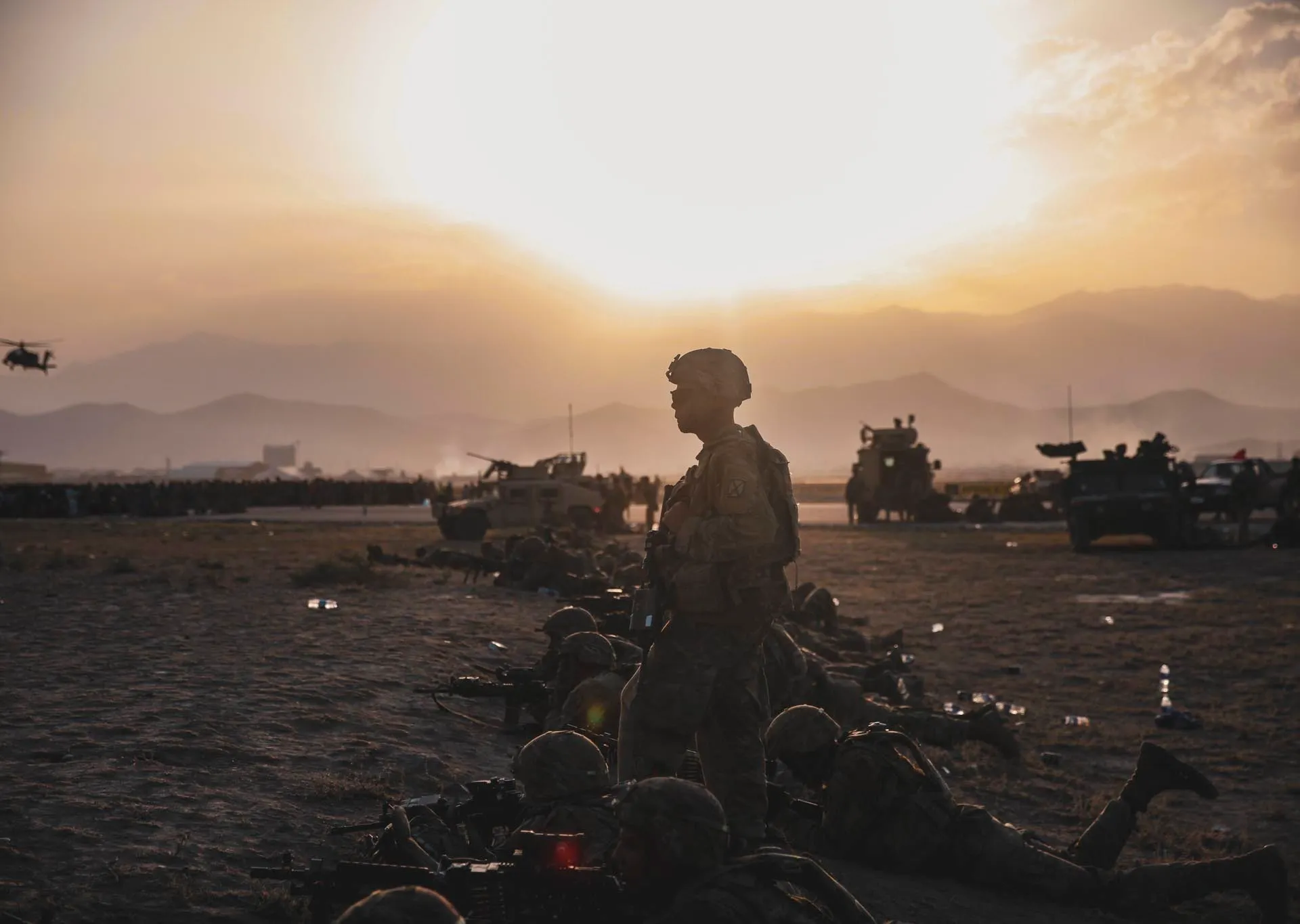
The US military has had 17 personnel killed in the war with Iran so far. Three of them have been killed since the resumption of the war about 10 days ago.
“We hit them very hard again tonight,” Trump said on Sunday, adding, “We did that in honour of the – probably three – it’s probably three great patriots.”
Two US personnel were killed in an Iranian attack on an airbase in Jordan on Friday, and a third is missing. Another soldier was killed last week in Iraq while defusing unexploded ordnance from an Iranian drone.
Tehran has claimed to have hit several US military facilities in Kuwait, Bahrain, and Jordan, including an aircraft at Aqaba airport.
Al Jazeera could not immediately verify the extent of damage to any facilities.
The Gulf
The renewed attacks from Iran on most Gulf countries, as well as Jordan, have forced them to deploy their interceptors. GCC countries had already used hundreds of expensive interceptors during the first phase of the US-Israel war on Iran in March and April.
But the Iranian military’s attacks have also hit civilian infrastructure in Gulf countries. The bombing of power and desalination plants in Kuwait has drawn widespread regional condemnation.
“What is happening is a severe shock to the GCC countries,” Nader Habibi, an Iranian-American economist, told Al Jazeera. “Now, after the disruptions of the past seven months, even as they have tried to avoid getting involved, the civilian population is indirectly impacted.”
Iran
The US insists that it has focused its attacks on Iran’s military infrastructure, especially on the country’s southern islands — some of which act as forward military or surveillance posts, and others that are believed to host missile bunkers.
But Tehran has accused the US of targeting civilian infrastructure as well in recent days, including bridges and tunnels, ports and dock facilities, power stations and water plants. Iranian officials have said more than 50 people have been killed and about 500 wounded in US attacks in the past three weeks.
Narrative
More than the war itself, a significant part of the messaging from the US and Iran has been over the control of the Strait of Hormuz.
The US
Washington says its renewed attacks are aimed at degrading Iranian capabilities to disrupt maritime traffic in the waterway, with Trump saying last week that “the US controls the Strait”.
Iran
Tehran has pushed back on Trump’s claim.
Farzanegan said Iran’s “ability to influence shipping through the Strait of Hormuz remains a unique source of bargaining power”. “Tehran is therefore prepared to bear considerable costs to preserve this leverage.”
He added that Iran may also calculate that extending part of the economic costs to neighbouring oil-exporting countries will encourage these governments to use their political influence in Washington and push the US towards negotiations.
“This appears to be one reason why Iran is prepared to maintain pressure in the Strait despite the considerable costs to its own economy,” the analyst added.
Aniseh Tabrizi, an associate fellow on the Middle East and North Africa Programme at think tank Chatham House in London, said the significant change since the MoU unravelled “is that there is less optimism than before about diplomacy being feasible”.
“For all the sides, it is difficult to foresee a scenario in which another deal is not only reached, but also implemented successfully,” she told Al Jazeera. “And that makes it particularly concerning for all the parties involved.”
Tabrizi noted that there appears to be “no imminent drive” from the Iranian side to sign a deal. “They are still maintaining escalatory attacks, but also reciprocating the kind of attacks that are conducted against the country,” she said.

The Gulf
GCC countries have continued to condemn Iran’s attacks on the regional countries, while calling for diplomacy to dial down the escalation. They have made it clear that Iran’s unilateral control over the Strait of Hormuz would not be acceptable to them.
Tabrizi added that, like the weeks before the Islamabad MoU, regional countries, especially Qatar, are still batting for talks.
If anything, Farzanegan said, the economic losses can bring all the sides to the table again for talks.
“Higher economic losses increase the incentives for negotiations,” he said. “A return to negotiations becomes more likely when both sides conclude that continued escalation cannot improve their bargaining position.”
Economist Habibi agreed that if an agreement is reached again, “it would be primarily because of the stability of the economic pressures on both sides”. However, he added that the probability of escalation in the next couple of weeks is higher than the probability of negotiation.
[ad_2]
Source link
